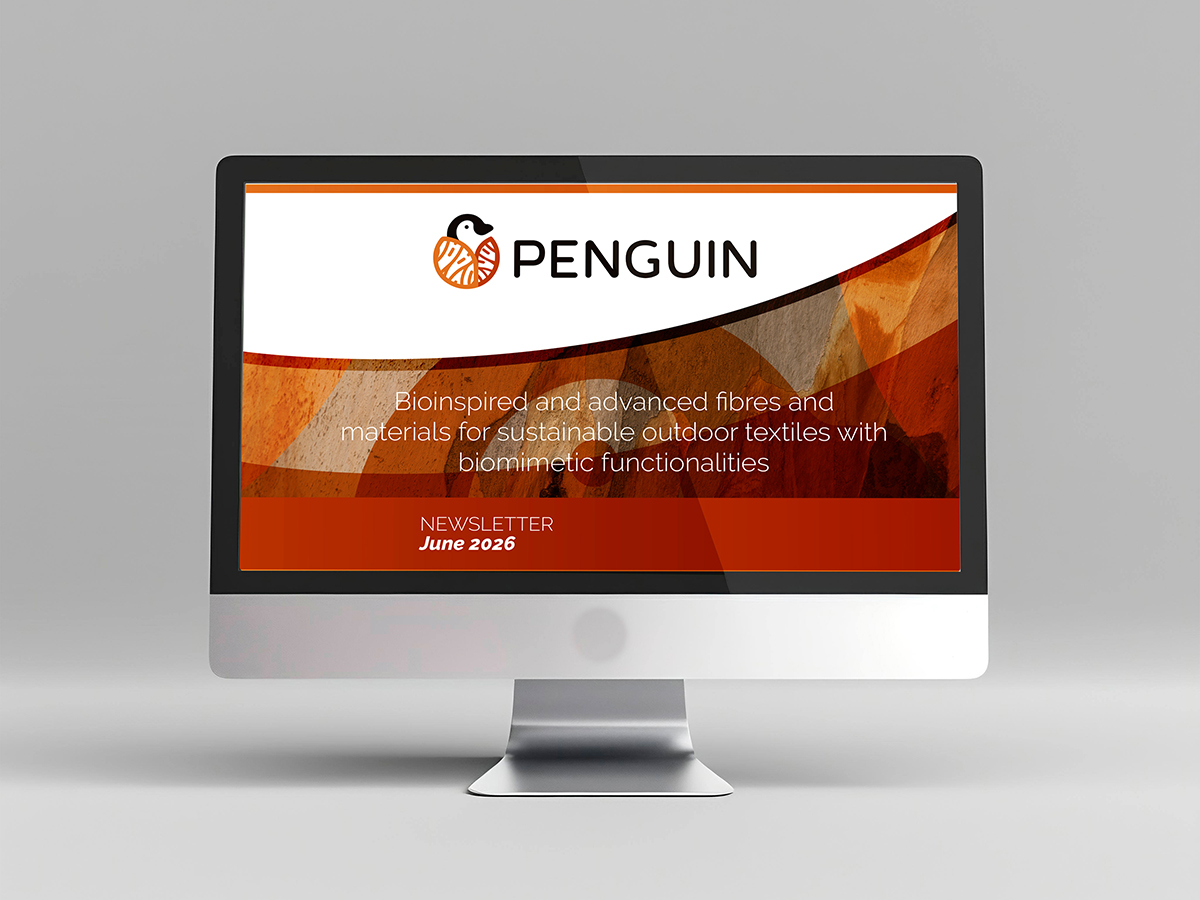
The global outdoor apparel industry is reaching a critical environmental turning point, and the solution lies in replacing fossil-fuel-based synthetics with biodegradable, circular alternatives. The PENGUIN Project has officially released its 4th newsletter, charting a massive technical leap as the European consortium transitions bio-inspired developments from lab-scale research into real-world pilot validation.
Marking the project’s 24-month milestone, European partners recently converged for a face-to-face progress meeting hosted by RINA in Genoa, Italy, to map out the next phase of sustainable garment prototyping. Under the leadership of project coordinator Emmi Nuutinen from VTT, the consortium is shifting its core focus toward scaling up manufacturing routes under real industrial conditions. This critical pivot bridges laboratory concepts with commercial textile manufacturing, bringing the team closer to delivering fully functional, circular outdoor jacket prototypes by the end of the project.
Replacing Synthetic Textiles with Bio-Based Materials
The latest project updates highlight massive strides across several core technical pillars designed to challenge traditional synthetic market dominators like polyester and nylon. Moving away from plastic-based fillings, partners are engineering high-performance cellulose-based insulation alternatives. VTT has successfully optimized highly porous, continuous insulation paddings via advanced foam-forming and air-laid technologies. In parallel, textile manufacturer Molina has advanced loose-fill fibreball concepts by blending SPINNOVA® fibers with recycled polyester and biodegradable PLA, closely replicating the loft, softness, and compressibility of traditional down.
A major technical challenge for cellulose insulation materials has traditionally been moisture absorption. To solve this, green chemistry pioneer OrganoClick developed bio-based water-repellent finishing treatments that dramatically reduced insulation moisture absorption from over 1,500% to below 100%, significantly increasing wash durability and preventing clumping during laundering. PENGUIN is also integrating smart functionalities into these eco-friendly designs, as VTT and Grado Zero advance textile-integrated, reusable heating systems and wearable sensors compatible with circular design and easy disassembly.
Showcasing Bioeconomy Innovations on the International Stage
The past few months have been packed with international dissemination, showcasing wood-derived cellulose alternatives to global leaders and fashion supply chain experts. VTT presented advanced cellulose insulation samples at the prestigious New Wood Exhibition in London, drawing high-profile attention from distinguished guests, including Finnish President Alexander Stubb and King Charles III. Wood-derived padding alternatives were also showcased to international forest and pulp industry stakeholders at the Pulp & Beyond Fair in Helsinki, Finland.
In Milan, Italy, Confindustria Moda presented the project’s smart fashion breakthroughs and textile engineering developments to apparel manufacturing leaders during the SAMAB International Congress. Additionally, VTT participated in the PRINSE’26 Seminar in Oulu, Finland, to demonstrate a flexible printed heater prototype, highlighting low-energy smart textile integration to tech developers and industry stakeholders.
Access the New PENGUIN Leaflet and Dissemination Poster
To help brands, researchers, and stakeholders dive into the science of biomimetic performance textiles, the project has officially unveiled a newly released informational leaflet and a core dissemination poster. These newly released visual assets outline the strategic dual-technology approach, circularity-by-design practices, and the roadmap toward deploying functional, biodegradable garment prototypes. They detail how the consortium modifies Biocelsol and SPINNOVA® fibers to enhance hydrophobicity and structural integrity after laundering without compromising the fabric’s signature soft handfeel.
Industry professionals can stay connected with the future of the circular textile value chain by downloading the full newsletter and reviewing the new leaflet on the official PENGUIN project portals. You can check out the website or follow the journey on LinkedIn and X to ensure you do not miss any technical milestones.